


Evaluating the Core Dilemma for Furniture Buyers
For furniture procurement managers, bulk importers, and e-commerce brands, expanding a living room inventory involves a critical balancing act between structural integrity, aesthetic appeal, and supply chain logistics. When sourcing a new coffee table line, the decision frequently comes down to Medium Density Fiberboard (MDF) versus solid wood. Choosing the wrong material can lead to high product return rates, inflated freight costs, or uncompetitive retail pricing. This guide breaks down the technical, financial, and logistical variables of both materials to help you make data-driven purchasing decisions for your target market.
Market Dynamics: What Global Consumers Demand
Understanding broader industry shifts is essential before finalizing high-volume procurement contracts. According to global furniture industry estimates, the modern living room segment is experiencing a strong structural shift toward functional, space-saving configurations. Driven by the expansion of online home goods retail, international logistics costs now account for a substantial portion of a product's landed price.
Data from recent retail furniture sector surveys indicates that over 65% of online consumers prioritize scratch-resistant surfaces and clean geometric silhouettes over traditional heirloom furniture. Concurrently, environmental compliance has become a strict barrier to entry. B2B buyers targeting the European and North American markets must ensure their product portfolios utilize raw materials that strictly adhere to international environmental parameters, including high-quality FSC-certified wood boards and low-emission laminates
Technical Performance: Stability, Machining, and Structural Longevity
Dimensional Stability Under Variable Climates
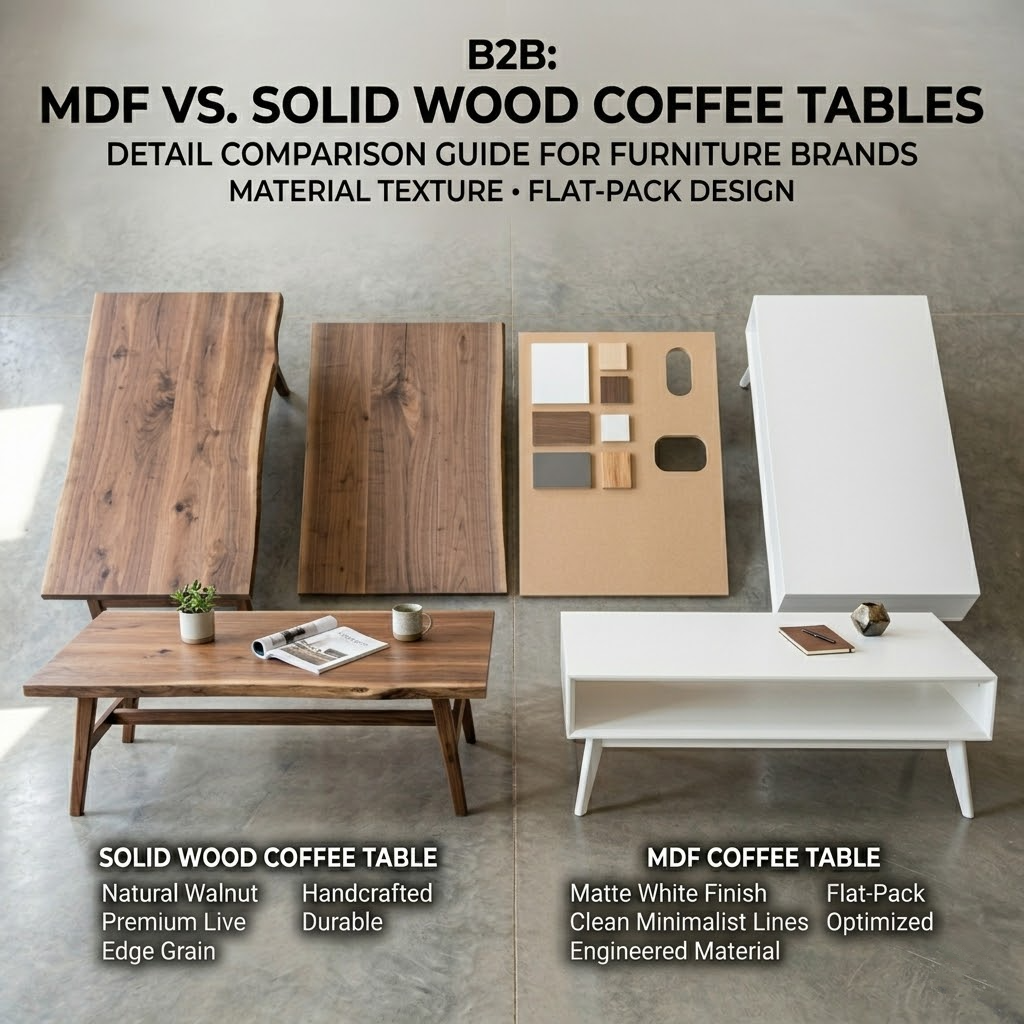
Medium Density Fiberboard (MDF) is an engineered wood product manufactured by breaking down wood residuals into fine fibers, combining them with resin binders, and pressing them into dense panels under high temperature. This process yields a highly uniform internal structure free from natural defects like knots or grain deviations.
From an engineering standpoint, MDF offers exceptional dimensional stability. Unlike a wood coffee table, which inherently reacts to shifts in ambient humidity and temperature by expanding, contracting, or warping, high-grade MDF remains completely flat. This predictability makes it highly effective for precise manufacturing, particularly when engineering a complex modern coffee table with strict hardware tolerances.
Furthermore, MDF serves as an ideal substrate for advanced decorative overlays, including high-performance melamine, PVC veneers, and 3D textured wrapping
+--------------------------+-----------------------+-------------------------+
| Performance Metric    | MDF with Melamine   | Solid Wood (Oak/Pine)  |
+--------------------------+-----------------------+-------------------------+
| Dimensional Stability  | Excellent (No Warp)  | Prone to Warping    |
| Surface Consistency   | Uniform Panels    | Natural Variations   |
| Custom Shape Machining  | Highly Precise    | Grain-Dependent     |
| Relative Material Cost  | Baseline (1x)     | Premium (2.5x - 4x)   |
+--------------------------+-----------------------+-------------------------+
Solid wood, conversely, provides undeniable premium appeal and long-term durability. For high-end furniture collections, natural timber is often preferred for load-bearing structural components, such as the tapered legs of a contemporary sideboard or the solid base of a heavy round cocktail table
Logistical Impact: Flat-Pack Engineering and Carton Optimization
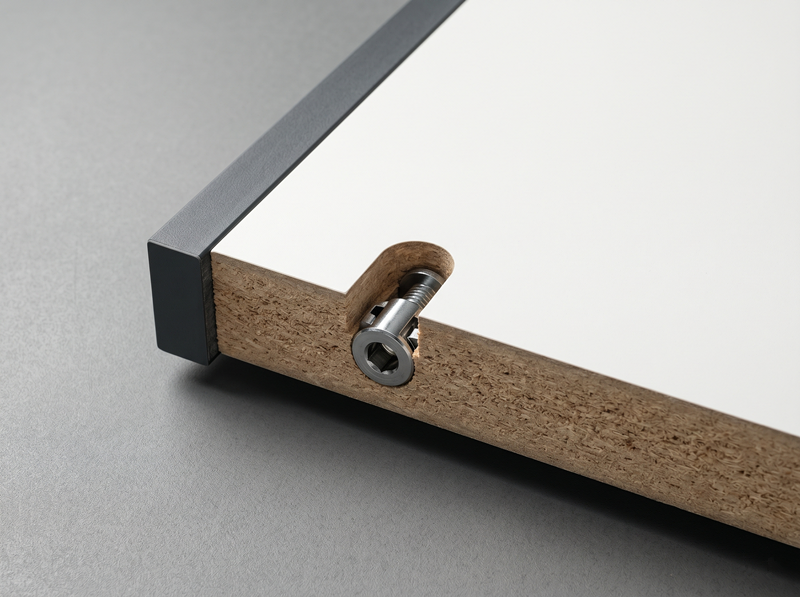
For online brands selling on international platforms, shipping efficiency directly determines profitability. Here, engineered wood options offer clear logistical advantages over solid timber. MDF panels can be precision-machined via automated automated CNC lines to accommodate specialized, knock-down (KD) flat-pack structures
A flat-pack steel-wood round coffee table or a multi-tier nesting set can be securely packed with export-grade foam edge protectors to withstand harsh final-mile parcel shipping
    [Raw Material Quality Check]
           │
           ▼
   [Pre-Production Sample Testing]
           │
           ▼
    [Automated CNC Machine Check] ──► (Ensures precise KD hardware alignment)
           │
           ▼
    [Steel-Frame / Board Fit Test]
           │
           ▼
    [Post-Packing 10-Point Drop] ──► (ISTA Standard Transit Verification)
Solid wood components can also be designed for flat-pack assembly, but natural grain variations introduce slight structural tolerances over time. To compensate, factories must use thicker, more conservative protective padding, which increases overall carton volume and raises final-mile delivery fees for e-commerce retailers.
Sourcing Benchmarks for B2B Procurement Decisions
When developing a commercial living room line, B2B buyers should establish clear engineering and manufacturing compliance benchmarks:
Material Certification:加工木材製品ラインでは、欧州の規制および調達監査に問題なく合格できるよう、E1グレードの高品質なFSC認証木材ボードを指定してください。
。 ハードウェアと機能:コレクションに機能的な動きが含まれている場合、丸いコーヒーテーブル 一体型のリフトトップ収納コンパートメントを備えた内部の機械式ヒンジは、パネルの破損を防ぐためにスムーズな動作と強化された構造取り付けを備えている必要があります。
。 サプライヤーの俊敏性:デザインと貿易業務を統合し、柔軟な最小発注数量(MOQ)(アイテムごとに100~200個など)を提供するサプライヤーと提携することで、リスクの低い市場テスト、製品の反復開発、持続可能なポートフォリオの成長が可能になります。
。
よくある質問:材料の調達と選定
Q:なぜ多くのECブランドは、円形コーヒーテーブルの素材として無垢材よりもMDFを好むのでしょうか?
A:MDFは優れた寸法安定性と均一な密度を備えているため、切断時に木目に沿って割れたり、ひびが入ったり、反ったりすることはありません。丸いコーヒーテーブルシルエット。その構成により、自動CNCマシンで精密な接合部を切削できるため、国際輸送および倉庫保管コストを削減するフラットパック構造との互換性が非常に高い。
Q:人工木材を使用したコーヒーテーブルは、小売家具ブランドにとって高級感のある外観を実現できますか?
A:はい。MDFコアに高級木目調化粧板、多色仕上げ、または大理石調メラミンを施すことで、メーカーは高級素材の美観を正確に再現できます。
Q:B2Bバイヤーは、最終輸送段階での損傷を防ぐために、どのような梱包要件を義務付けるべきでしょうか?
A:輸入業者は、サプライヤーに対し、ISTA 10点落下試験基準に準拠したフラットパック包装を設計するよう厳しく要求すべきである。
信頼できるB2Bソリューションのためのパートナーシップ
今後発売予定のリビングルーム家具のサプライヤーをお探しでしたら、弊社がサプライチェーンの効率化をお手伝いいたします。弊社は、グローバルなeコマース物流に最適化された、市場投入準備済みのフラットパック式スチール&ウッド家具ソリューションの設計・製造を専門としており、厳格な多段階品質管理システムによって検証されています。